Guide
How to Write a Choose Your Own Adventure Story (+20 Prompts)
To write a choose-your-own-adventure story, give your protagonist a clear goal, pick a branching structure like branch-and-bottleneck so the story does not explode in size, offer two or three choices that change events (try bold, cautious, weird), and plan endings that each answer the goal differently. Draft the main path first.
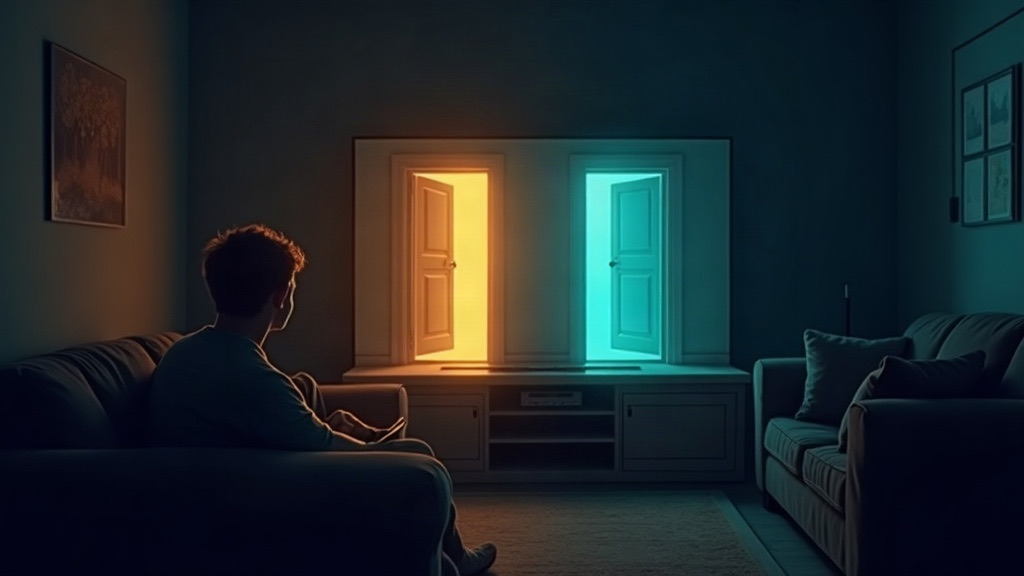
Choose-your-own-adventure stories look simple from the reader's side: you pick, you turn the page. For the writer, every choice is a promise that something different will happen.
This guide covers the parts that actually matter: how to structure branches so you can finish the thing, how to write choices readers care about, and how to end well. At the end there are 20 "What if…" premises you can use as a starting point, including as prompts in FICT if you want to see your story as a film.
A note on the name: "Choose Your Own Adventure" is a trademarked book series from Bantam, first published in 1979. Writers use the phrase generically for any branching, reader-directed story, and so do we here.
Start with a protagonist who wants something
Before any branching, you need one sentence: who wants what, and what is in the way? "A courier must deliver a dragon egg before it hatches" gives every choice a yardstick. Does this move get her closer or further? Is it worth the risk?
Choose a branching structure first
The single biggest reason choose-your-own-adventure stories never get finished is scope. If every choice splits into two new paths that never meet again, ten choices deep you would need over a thousand passages. Writers in the interactive fiction community have named the common shapes stories take; Sam Kabo Ashwell's widely shared essay on standard patterns in choice-based games is the usual reference. Here are the four most useful ones.
Time cave
Every choice leads to a new, unique branch, and branches never rejoin. It is the purest form and the most expensive. It gives huge variety, which is why classic gamebooks often used it, but those paths tend to be short and many end abruptly.
Use it when: the story is short, the joy is in exploring wildly different outcomes, and you do not mind abrupt endings.
Branch and bottleneck
Paths split apart, then come back together at key events: the heist, the ball, the storm. Between bottlenecks, choices change what happens and who is with you. At the bottleneck, everyone passes through the same moment, possibly in different states.
Use it when: you want a real plot with meaningful choices and a manageable number of scenes. This is the default for most story-driven writing.
Gauntlet
One main path runs straight through, with side branches that either end quickly (a failure or death) or loop back to the main line. The reader feels danger at every step, but the story mostly moves in one direction.
Use it when: you are writing a tense thriller or survival story and want a strong narrative spine.
Open map
Instead of a line, the story is a place. The reader moves between locations (the market, the tower, the docks) and can revisit them, with events unlocking as they go. It feels like a game world more than a plot.
Use it when: the setting is the star and you are comfortable tracking what the reader has already done.
| Structure | Shape | Writing effort | Best for |
|---|---|---|---|
| Time cave | Branches split and never rejoin | Very high | Short, wild, exploratory stories |
| Branch and bottleneck | Split, then rejoin at key events | Moderate | Plot-driven stories with real choices |
| Gauntlet | One spine with dead-end or looping side paths | Low to moderate | Thrillers, survival, escape stories |
| Open map | Locations you move between | High (tracking state) | Exploration and mysteries |
How to write choices that matter
The three-option rule: bold, cautious, weird
Two options can feel like a coin flip. Four or more tend to blur together. Three is the sweet spot, as long as each one pulls in a clearly different direction. A reliable pattern:
- Bold: the direct, risky move. Jump onto the moving train.
- Cautious: the safe or clever move. Wait and follow the conductor.
- Weird: the surprising move that opens a new direction. Ask the stray cat for directions.
The weird option is often the one readers remember.
Other rules that save a story
- Make choices change events, not wording. If both options lead to the same scene with a different line, readers will notice.
- Show the stakes before the choice. The reader needs enough information to choose on purpose.
- Avoid obvious traps. "Open the glowing cursed box" versus "don't" is not a choice. Make both options tempting.
- Pay off earlier choices. Bring back the person you helped or the item you took. That is what makes readers feel their choices counted.
How to write endings for choose-your-own-adventure stories
Each ending should answer the protagonist's goal in a different way: achieved, failed, changed, or traded for something else. A few guidelines:
- Give at least one ending that feels fully earned and satisfying.
- Make bad endings interesting, not just punishing. A strange or funny failure invites a replay.
- Echo the opening. A final image that mirrors the first scene makes any ending feel complete.
Choose your own adventure examples
It's easier to write branches once you've seen a few. Here's one short example written with the rules above, followed by well-known examples in other formats.
A short example: "The Night Courier"
Opening: Mira, a bike courier, has twenty minutes to deliver a sealed envelope across the city. At a red light, the envelope starts to hum.
- A (bold): Tear it open. Inside is a map of tomorrow's city, with her own street crossed out.
- B (cautious): Call the dispatcher. The line connects, but the voice answering is her own.
- C (weird): Ask the pigeon on the handlebars what to do. It takes the envelope and flies toward the old clock tower.
Bottleneck: every path ends at the clock tower at midnight, where the recipient is waiting. What Mira knows when she arrives depends on the path: she's read the map, she's heard her future self, or she has no envelope at all. That gives three different versions of the same final scene:
| Path | What Mira brings to the tower | Ending |
|---|---|---|
| A: opened it | The map, and a reason to be angry | She bargains to save her street (changed) |
| B: called | A warning from herself | She refuses the delivery and walks away (traded) |
| C: pigeon | Nothing, and she's late | The recipient hires her for the next job (strange, invites a replay) |
Notice the pattern: each choice changes an event, not just a line, and the bottleneck keeps the whole thing to about seven scenes.
Well-known examples to study
- Classic gamebooks. The original Bantam series began in 1979 with Edward Packard's The Cave of Time, a good study in the time-cave structure: many short paths, many sudden endings.
- Books for grown-up readers. Parody and romance titles use the same mechanics with adult themes; see our list of choose your own adventure books for adults.
- Interactive film. Netflix's Black Mirror: Bandersnatch (2018) put choices into a feature-length film. Our short history of interactive movies covers it and what came before.
- Apps and games. Story apps and text games run on the same branch-and-bottleneck logic; compare them in the best interactive story apps.
Draft the main path first
Write the most satisfying path start to finish, like a normal story. Then add branches where a reader would genuinely hesitate. You will finish far faster than branching from page one.
20 "What if…" premises for choose-your-own-adventure stories
Each premise names a protagonist with a goal, a world, a mood, and a visual style, which is also exactly what FICT asks for. Use them as writing prompts, or paste one into FICT and start directing. For 60 more, sorted by genre with a conflict and a twist for each, see 60 story ideas by genre.
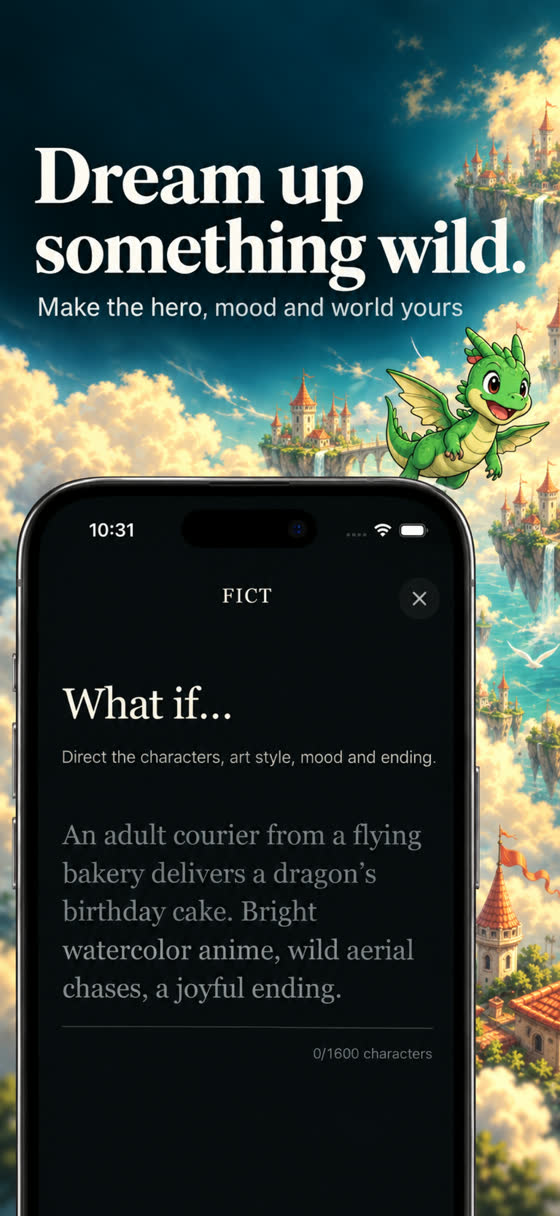
- Fantasy: What if a courier from a flying bakery had to deliver a dragon's birthday cake before sunset? Bright watercolor anime, wild aerial chases, a joyful ending.
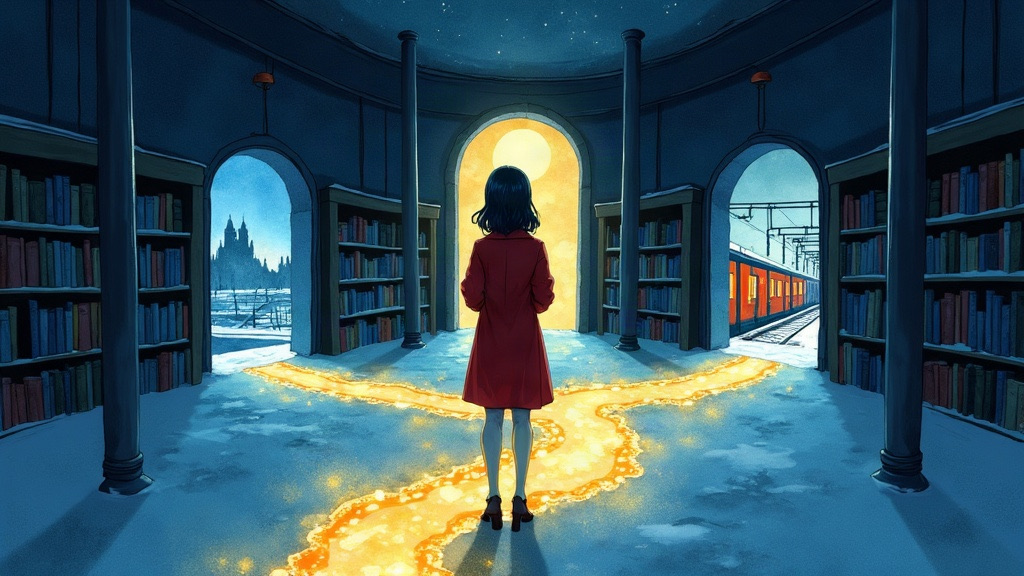
- Mystery: What if a night train only stopped for passengers holding a golden ticket, and a young woman in a red coat found one in her pocket? Moody anime, rain on the windows, quiet suspense.
- Romantic comedy: What if two rival florists on the same street were forced to design one wedding together? Soft pastel 3D, witty banter, slow-burn warmth.
- Action: What if a motorcycle racer had to win a race through a city where gravity switches off every sixty seconds? Bold anime, neon streets, high speed.
- Cozy slice-of-life: What if a retired sea captain opened a tiny noodle shop that only opens when it rains? Warm watercolor, gentle humor, rainy evenings.
- Fantasy: What if a young thief at a moonlit market stole a lantern that holds a fox spirit? Painterly anime, glowing lanterns, playful mischief.
- Mystery: What if a lighthouse keeper found a message in a bottle written in her own handwriting? Muted watercolor, fog, eerie calm.
- Romantic comedy: What if a clumsy barista kept accidentally writing her secret thoughts on customers' cups? Cheerful 3D, city café, lighthearted.
- Action: What if a museum guard had one night to stop a crew of art thieves who move like shadows? Sleek 3D, dramatic lighting, heist energy.
- Cozy slice-of-life: What if a young gardener's plants started growing in the shape of whatever she dreamed about? Soft watercolor, sunny mornings, wonder.
- Fantasy: What if a street chef had to cook a dish good enough to satisfy a hungry falling star? Glowing anime, night market, big feelings.
- Mystery: What if every clock in a small mountain town stopped at 3:17, except one? Classic anime, snowy streets, slow-building tension.
- Romantic comedy: What if two strangers kept being seated next to each other on every delayed flight for a year? Bright 3D, airports, charming coincidence.
- Action: What if a lifeguard on a floating island city had to stop a runaway sky ship? Vivid anime, ocean spray, rescue thrills.
- Cozy slice-of-life: What if a bookshop cat could recommend exactly the right book to every visitor? Warm 3D, rainy afternoons, gentle magic.
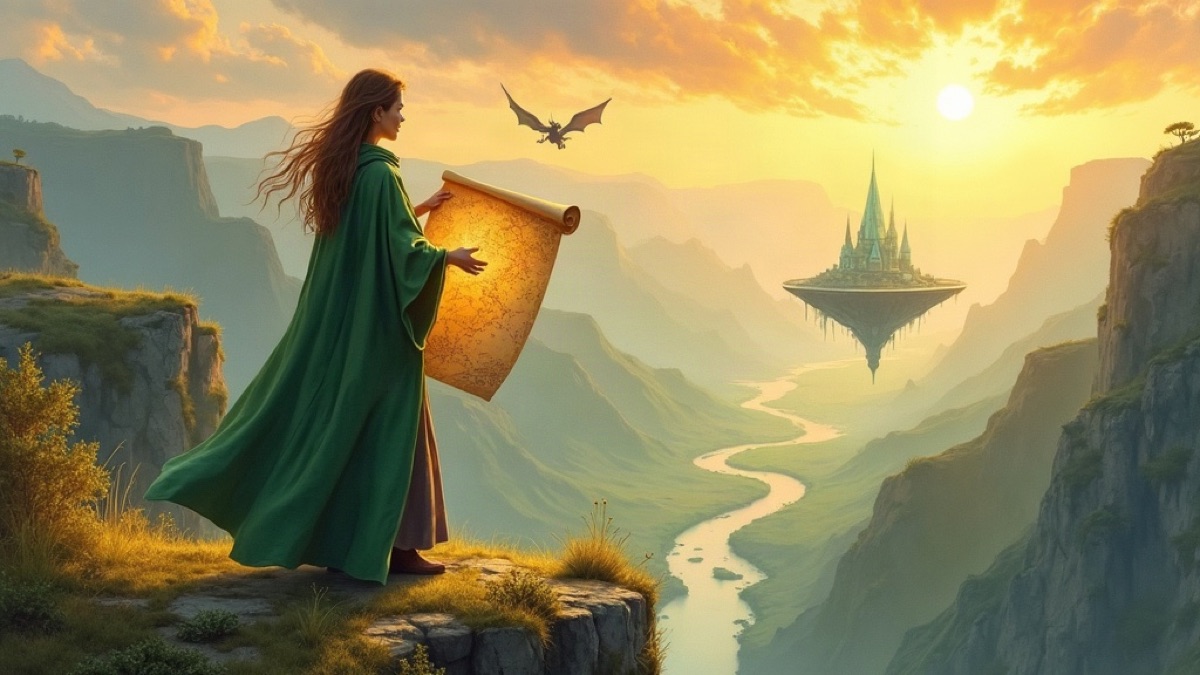
- Fantasy: What if an apprentice mapmaker discovered that anything she drew on her map became real by morning? Ink-and-watercolor, old harbors, curiosity.
- Mystery: What if a hotel concierge noticed a guest checking in who had checked out forty years ago? Elegant anime, art deco lobby, whispering suspense.
- Romantic comedy: What if a wedding band's shy drummer had to fake-date the bride's cousin for one chaotic weekend? Colorful 3D, summer party, farce.
- Action: What if a delivery drone pilot had to outrun a storm to get medicine to a mountain village? Cinematic 3D, sweeping landscapes, race against time.
- Cozy slice-of-life: What if an elderly baker and a teenage skateboarder swapped jobs for a week? Warm watercolor anime, small-town streets, feel-good.
How to turn a premise into a film in FICT
If you would rather see your story than lay it out page by page, FICT works as a choose-your-own-adventure maker for film:
- Write the premise. Open FICT and type your "What if…" in the premise field. Name the protagonist, world, mood, and visual style, such as anime, watercolor, or 3D. Or start from a story on the in-app shelf.
- Watch the first scene. FICT generates an animated scene with narration or dialogue text. Scenes are 5 or 10 seconds.
- Choose what happens next. After each scene, you get three suggested actions, or you write your own. This is where the bold, cautious, weird rule pays off: if none of the suggestions feel surprising enough, type the weird one yourself.
- Keep going until it ends. Films have no fixed length. You decide when the story is finished.
- Replay it. Completed choices are permanent, so the film records the path you took. Finished films replay start to finish.
One difference from writing on paper: because each choice is permanent in FICT, a single film follows one path through your story, the way a reader experiences one path through a book. To explore another direction, start a new film from the same premise and choose differently.
On cost: a 5-second scene uses 10 credits and a 10-second scene uses 20. New players get 20 free credits, enough for two short scenes, and a failed generation refunds its credits once. Optional subscriptions (FICT Director Weekly at US $8.99 and Yearly at US $59.99) are available; there is no free trial and no unlimited generation. There is no login, and your stories stay private.
For a broader walkthrough of shot choices and pacing, see how to make an AI short film. For the history behind the format, read choose-your-own-adventure movies, from Kinoautomat to Bandersnatch, and for other tools see the best interactive story apps and choose-your-own-adventure AI.

Write a “what if…”, watch the scene, choose what happens next. New players get 20 free credits.
Pick one premise, give your protagonist a goal, and make the first choice a weird one.
Frequently asked questions
How do you write a choose-your-own-adventure story?
Pick a protagonist with a clear goal, choose a branching structure (such as branch-and-bottleneck), write choices that change what happens rather than just wording, and plan a few endings that each resolve the goal in a different way. Draft the main path first, then add branches.
How many choices should each page or scene have?
Two to three is the sweet spot. Three works well when the options feel distinct: one bold, one cautious, and one strange. More than that tends to produce choices that blur together.
How many endings should a choose-your-own-adventure story have?
There is no rule. Short stories often work with three to five endings. What matters more is that each ending feels earned by the choices that led to it.
What is the best choose-your-own-adventure maker?
It depends on the output you want. Twine is a free, open-source tool for text stories that play in a browser. FICT turns a written premise and your choices into an animated film, one 5- or 10-second scene at a time.
What is the branch-and-bottleneck structure?
It is a branching structure where paths split apart for a while and then rejoin at key story events. It lets choices feel meaningful without the number of scenes growing out of control.