List
Romance Tropes List: 37 Tropes With Meanings and Examples
Romance tropes are familiar setups readers recognize and search for. The most used are enemies to lovers, friends to lovers, fake dating, second chance, forced proximity, slow burn, grumpy and sunshine, forbidden love and love triangles. Below are 37 tropes, each with a one-line meaning and a well-known book or film that uses it.
Readers browse romance by trope the way other readers browse by genre. "Fake dating, small town, slow burn" says more about a book than "contemporary romance" does. If you are writing, the trope tells you where the tension comes from. If you are reading, it tells you what kind of night you are in for.
Each entry below has what the trope means and one example most readers will know. We picked examples where the trope is central to the story, not a passing scene, and left the example blank where we could not name one we were sure of. For story prompts built on these same tropes, see our 50 romance story ideas by trope.
What is a romance trope?
A trope is a common theme or plot device. In romance it is the pattern behind the love story: who the two people are to each other at the start, what keeps them apart, and what pushes them together. The genre itself is usually defined by two things, a story focused on a developing relationship and an emotionally satisfying, optimistic ending (the Romance Writers of America definition, as summarized on Wikipedia). Tropes are how writers vary everything in between.
A trope is not a cliche. The trope is the setup; the cliche is a lazy version of it. "Rivals forced to share an office" is a trope. "He is cruel for no reason until chapter 20, then suddenly isn't" is a cliche.
Romance tropes list: how the couple starts
These tropes are about where the relationship begins. Most romances have one of them at the center.
| Trope | What it means | Well-known example |
|---|---|---|
| Enemies to lovers | The couple starts in real conflict and ends up in love | Pride and Prejudice (Jane Austen); The Hating Game (Sally Thorne) |
| Rivals to lovers | They compete for the same job, prize or reputation | Beach Read (Emily Henry) |
| Friends to lovers | Long friendship slowly turns romantic | When Harry Met Sally (film); One Day (David Nicholls) |
| Second chance | Former lovers meet again years later | Persuasion (Jane Austen); The Notebook (Nicholas Sparks) |
| Fake dating | They pretend to be a couple for a reason, then the feelings get real | The Love Hypothesis (Ali Hazelwood); To All the Boys I've Loved Before (Jenny Han) |
| Fake engagement or marriage | The pretend relationship has higher stakes: family, visa, inheritance | The Proposal (film); The Unhoneymooners (Christina Lauren) |
| Fake courtship | A period version: a staged courtship to fix a social problem | The Duke and I (Julia Quinn, the first Bridgerton novel) |
| Strangers to lovers | They meet in the story and fall for each other with no history | Roman Holiday (film) |
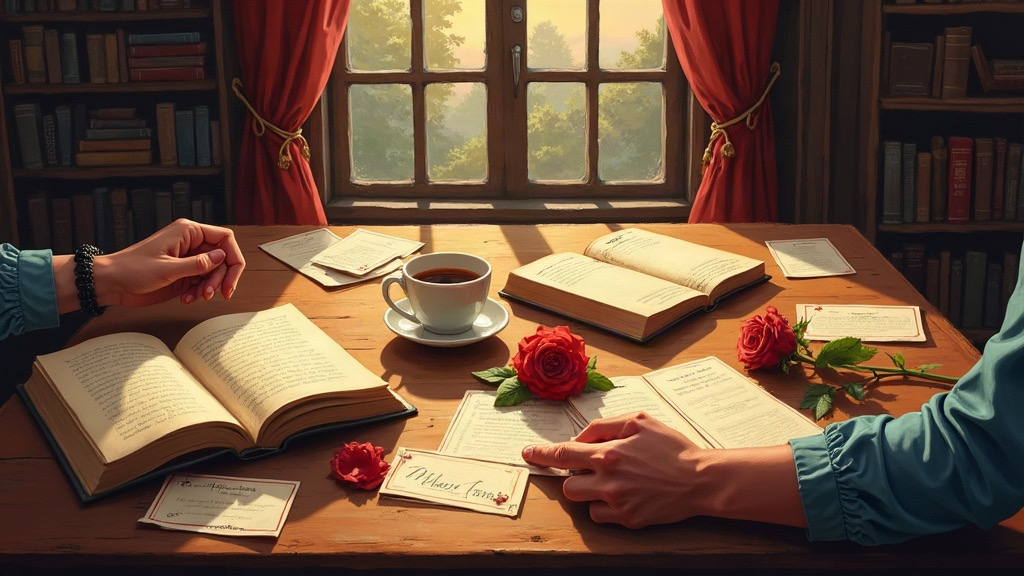
| Pen pals or anonymous messages | They fall for each other through letters or messages before knowing who the other is | You've Got Mail (film) |
| Love at first sight | Instant attraction drives the story from the first meeting | Romeo and Juliet (Shakespeare) |
Situation tropes: what keeps them together (or apart)
| Trope | What it means | Well-known example |
|---|---|---|
| Forced proximity | Circumstances make them share a space: a trip, a house, a project | The Unhoneymooners (Christina Lauren) |
| Only one bed | A small forced-proximity moment: the hotel has one room left | Common as a scene inside other tropes |
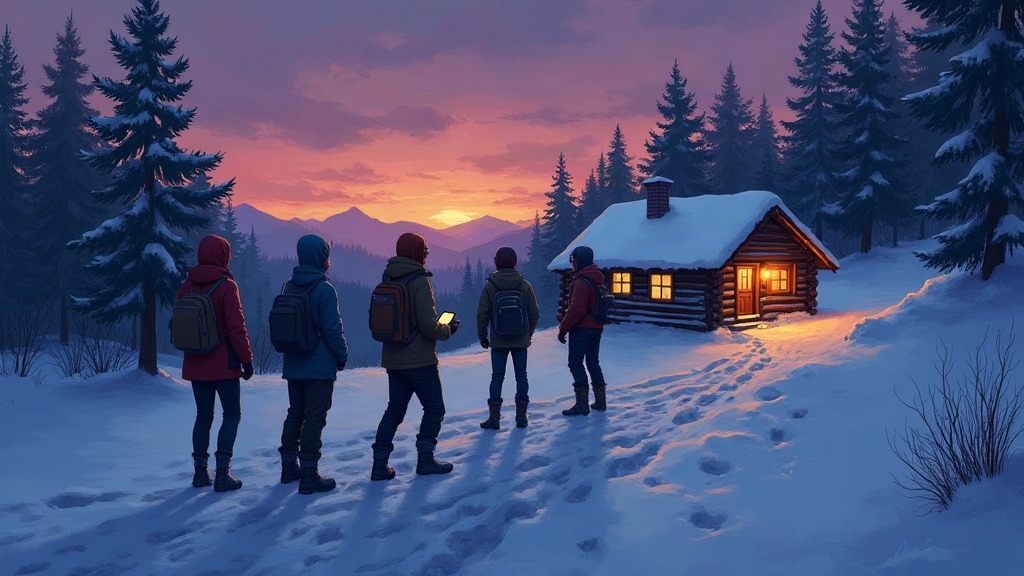
| Snowed in or stranded | Weather or distance traps them together for a few days | Common in holiday romance |
| Forbidden love | Family, rules or worlds say they cannot be together | Romeo and Juliet (Shakespeare); Twilight (Stephenie Meyer) |
| Secret relationship | They are together but must hide it | Red, White & Royal Blue (Casey McQuiston) |
| Love triangle | Two people compete for a third person's love | The Hunger Games (Suzanne Collins); Twilight series |
| Mistaken identity | Someone is taken for someone they are not, and the lie grows | While You Were Sleeping (film) |
| Secret identity | One of them hides who they really are, often royalty or fame | Roman Holiday (film) |
| Amnesia | One partner forgets the relationship and it has to be won again | The Vow (film) |
| Bodyguard | The protector falls for the person they are paid to protect | The Bodyguard (film) |
| Workplace or boss and employee | Office rules and power add the obstacle | The Hating Game (Sally Thorne); The Proposal (film) |
| Terminal illness | Time is running out, so every scene counts | The Fault in Our Stars (John Green); Me Before You (Jojo Moyes) |
Character tropes: who they are
| Trope | What it means | Well-known example |
|---|---|---|
| Grumpy and sunshine | One is guarded and gruff, the other open and cheerful | Luke and Lorelai in Gilmore Girls (TV) |
| Opposites attract | Different worlds, habits or values, and that is the pull | Grease (film) |
| Celebrity and ordinary person | Fame meets a normal life | Notting Hill (film) |
| Royal romance | A prince or princess falls for someone outside the palace | The Princess Diaries (Meg Cabot); Red, White & Royal Blue |
| Class difference | Money and status stand between them | Titanic (film) |
| Single parent | A child is part of the deal and part of the stakes | Sleepless in Seattle (film) |
| Beauty and the beast | A feared or cursed figure is softened by love | Beauty and the Beast (fairy tale and films) |
| Sibling's best friend | The off-limits person is close to family | Common in contemporary romance |
| Protective hero ("who did this to you") | One partner's protectiveness shows how much they care | Common as a scene in romantasy and romantic suspense |
Setting and genre tropes
| Trope | What it means | Well-known example |
|---|---|---|
| Slow burn | The couple gets together late; the wait is the point | Anne and Gilbert across the Anne of Green Gables books (L. M. Montgomery) |
| Small-town romance | A newcomer or returner falls for someone in a tight community | Virgin River (Robyn Carr) |
| Holiday romance | A short, bright season with a built-in deadline | The Holiday (film) |
| Fated mates or soulmates | A magical or destined bond ties them together | A Court of Thorns and Roses series (Sarah J. Maas) |
| Romantasy enemies to lovers | Enemies to lovers inside a fantasy war, court or academy | Fourth Wing (Rebecca Yarros) |
| Time travel romance | Love across centuries, with history as the obstacle | Outlander (Diana Gabaldon); The Time Traveler's Wife (Audrey Niffenegger) |
For fantasy-specific setups, our fantasy story ideas include a romantasy section.
Which romance tropes are the most popular?
We could not find a reliable count, so we will not invent one. Bookstores, reader polls and social media tags each rank tropes differently, and the order changes with whatever book is selling that year. What we can say from reading the lists that rank for this search: enemies to lovers, friends to lovers, fake dating, second chance, forced proximity, slow burn and grumpy and sunshine appear on nearly all of them. Treat any "top 10" with a number attached as one site's opinion unless it shows how it counted.
How to use a romance trope without it feeling like a cliche
- Give the conflict a real cause. Enemies to lovers works when the reason they clash is fair on both sides, as in Pride and Prejudice, where both first impressions are partly right.
- Make the trope cost something. Fake dating is fun until someone's job, family or visa depends on the lie.
- Stack two tropes, not five. One trope for the main tension, one for the setting or scenes. Fake dating plus forced proximity is a classic pair.
- Change one expected beat. Keep the trope but move the twist: the second-chance couple broke up for a reason that turns out to still be true.
- Let readers see it early. Readers who search by trope want it on the first pages, not revealed halfway through.
| Trope pair | Why it works |
|---|---|
| Fake dating + forced proximity | The lie has to hold up at close range, all day |
| Enemies to lovers + slow burn | The conflict justifies the long wait |
| Second chance + small town | Going home means running into the past |
| Forbidden love + secret relationship | Every scene together is a risk |
| Grumpy and sunshine + workplace | They cannot avoid each other, so the contrast shows daily |
Need a starting premise? Our what if scenarios work well as the first line of a romance, and 60 short story ideas covers other genres.
Watch a romance trope play out and pick the path
If you would rather watch a trope unfold than write one, FICT: AI Movie Maker is our app for iOS and Android from SecondEarth AI, Inc. Every night at 8 PM (you can change the time) a new AI movie stops at a fork, and you pick one of three people. Their path plays right away: about four 10-second scenes, with one more choice in the middle, ending in a movie poster with your name on it. One night each week the fork is a slow-burn romance, and another night it is a wedding drama.
To be clear about the limits: FICT does not let you choose a trope from a list, and it does not write a romance from your premise for free. Your first path each night is free. FICT Director, the optional subscription (US $8.99 weekly or US $59.99 yearly, local price shown in the app, no free trial), unlocks every path and lets you write your own twist, which becomes new AI scenes at 20 credits per 10-second scene. If you like choosing the path on paper instead, see our choose your own adventure books for adults.

Every night at 8, a new AI movie stops at a fork. Pick one of three and your path plays right away. Your first path every night is free.
Sources
- Wikipedia. Romance novel (definition and Tropes section). checked 2026-10-30; definition of the genre (developing relationship, emotionally satisfying and optimistic ending) and 'a trope is a common theme or plot device'
- Jane Austen (1813). Pride and Prejudice (Project Gutenberg edition). public-domain text
- Jane Austen (1817). Persuasion (Project Gutenberg edition). public-domain text
Frequently asked questions
What are the most common romance tropes?
Enemies to lovers, friends to lovers, fake dating, second chance, forced proximity, slow burn, grumpy and sunshine, forbidden love and the love triangle appear on almost every list. There is no official count of which is most popular; reader polls and bookseller tags give different orders.
What is a trope in romance?
A trope is a familiar setup or pattern that readers recognize, such as two rivals forced to work together. It tells the reader what kind of tension to expect. It is not a plot by itself: the characters, stakes and ending still have to be written.
Is a trope the same as a cliche?
No. A trope is the pattern, a cliche is a tired way of executing it. Enemies to lovers is a trope; a rival who is rude for no reason and changes overnight is a cliche. Giving the conflict a real cause and a cost keeps a trope fresh.
Can a romance use more than one trope?
Yes, and most do. Popular books often stack two or three, such as fake dating plus forced proximity, or enemies to lovers inside a fantasy war college. Pick one main trope for the central tension and let the others shape scenes.
What is the difference between slow burn and enemies to lovers?
Slow burn describes pace: the couple gets together late in the story. Enemies to lovers describes the starting point: the couple begins in conflict. They often go together, but a friends-to-lovers story can be a slow burn too.